Understanding MDR/TDR: The real cost of PG services in 2026
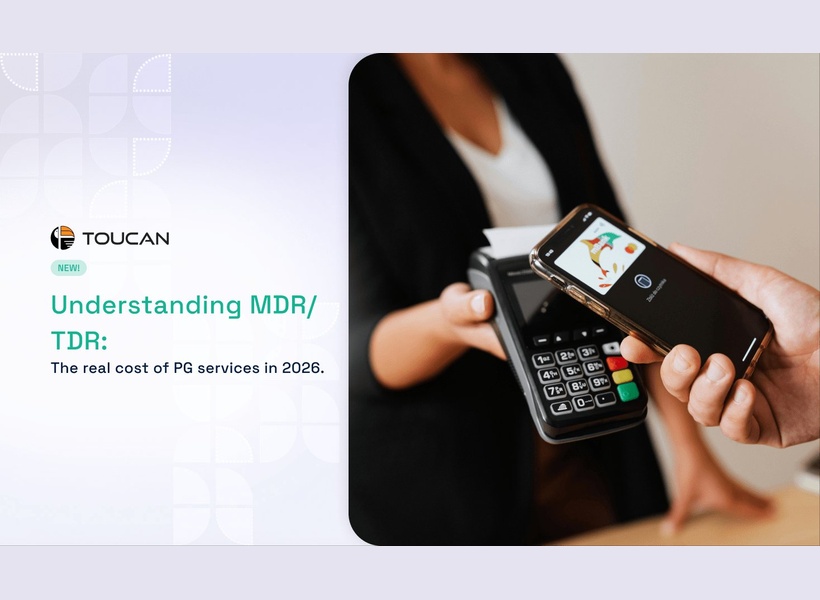
If you’re running an online business in 2026, you’ve likely encountered the terms MDR and TDR on your payment gateway invoices. These fees—often presented as simple percentages—can significantly impact your bottom line, especially as transaction volumes grow. Yet many merchants don’t fully understand what they’re paying for, why rates vary so dramatically across payment methods, and how to optimize these costs.
What Are MDR and TDR?
MDR (Merchant Discount Rate) and TDR (Transaction Discount Rate) are percentage-based fees deducted from every successful transaction processed through a payment gateway. These terms are often used interchangeably in the industry, representing the core processing cost that merchants pay for accepting digital payments. When a customer completes a payment, the TDR amount is automatically deducted by the payment gateway before settling the proceeds to your bank account.
The MDR components include interchange fees paid to issuing banks, payment network charges, gateway processing costs, and the payment aggregator’s margin.
Payment Gateway Charges India 2026: Current MDR/TDR Rates
Payment gateway fees in India vary significantly based on the payment method, with rates ranging from as low as 0.5% for UPI payments to over 5% for Buy Now Pay Later (BNPL) services.
Breaking Down the Cost Components
Understanding what you’re actually paying for helps you evaluate whether you’re getting a fair deal. MDR/TDR isn’t a single fee—it’s a collection of charges split among multiple parties in the payment ecosystem:
1. Interchange Fee
This is the largest component, typically accounting for 70-80% of the total MDR. The interchange fee is set by card networks (Visa, Mastercard, RuPay) and paid to the bank that issued the customer’s card. It compensates the issuing bank for the credit risk they assume and the benefits they provide (like reward points, fraud protection, and credit facilities).
2. Assessment Fee
Card networks like Visa, Mastercard, and RuPay charge an assessment fee (typically 0.1-0.15% of the transaction value) for using their payment infrastructure, brand, and network services.
3. Payment Processor Markup
Your payment gateway or acquiring bank charges a markup to cover their costs and profit margin. This includes technology infrastructure, fraud detection systems, customer support, settlement operations, and compliance management.
4. Platform and Service Fees
Additional charges may apply for premium features like instant settlements (T+0), advanced analytics dashboards, fraud management tools, reconciliation services, and dispute resolution support.
UPI Zero MDR Policy 2026
UPI payments continue to operate under a zero MDR model for peer-to-peer transactions, with the government allocating ₹2,000 crore in the Union Budget 2026 to support UPI and RuPay debit card incentives. However, industry experts argue that this allocation falls short of the ₹10,000 crore needed to sustainably support the ecosystem processing 30 crore transactions daily.
Strategic Ways to Reduce Your Payment Processing Costs
Payment gateway charges are often treated as fixed costs, but savvy merchants can implement strategies to significantly reduce their effective rate:
1. Promote UPI for Small Transactions
Since UPI carries zero MDR, actively encourage customers to use UPI for low-value purchases. Offer incentives like small discounts or faster checkout. Position UPI as the default option in your payment flow.
2. Use Standard Settlement Cycles
Instant (T+0) settlements are convenient but expensive. Unless you have urgent cash flow needs, opt for T+1 or T+2 settlements to avoid additional payout charges.
3. Negotiate Volume-Based Rates
If you’re processing ₹10 lakh+ monthly, negotiate custom pricing with your payment gateway. Share your expected monthly volumes, payment method split, and average ticket size.
4. Optimize Payment Method Mix
Analyze which payment methods your customers actually use. If 60% pay via UPI and 30% via debit cards, but you’re paying for wallet integrations that see <1% usage, consider pruning low-utilization methods to simplify operations.
5. Implement Smart Routing
Modern payment orchestration platforms like ToucanPay’s SuperStream can intelligently route transactions to the lowest-cost payment service provider (PSP) based on real-time factors: transaction value, payment method, success rates, and cost.
Conclusion: Making Informed Payment Gateway Decisions
Understanding MDR and TDR is just the beginning of comprehending payment gateway costs in 2026. The real cost of payment acceptance includes a complex web of charges spanning setup fees, maintenance costs, per-transaction fees, compliance charges, and premium rates for specific payment methods or faster settlements. For Indian merchants, RBI regulatory caps on debit card MDR and the zero MDR policy on UPI provide some relief, but the sustainability of these models remains under scrutiny.
Why Toucan Payments can be your best bet?
Among the evolving landscape of payment gateways in India, Toucan Payments has emerged as a compelling choice for businesses seeking a modern, reliable, and customer-centric payment solution. Toucan’s transparent pricing with no hidden charges, superior transaction success rates powered by intelligent payment routing, comprehensive support for all major Indian payment methods including UPI, cards, net banking, and wallets, quick settlement cycles, developer-friendly APIs with extensive documentation alongside no-code payment links for non-technical users, an advanced merchant dashboard with real-time analytics and actionable insights, robust PCI-DSS Level 1 security with AI-powered fraud detection, 24/7 customer support, and features tailored for diverse business models including subscriptions, marketplaces, and e-commerce-makes it an ideal long-term payment partner for ambitious Indian businesses in 2026 and beyond.
Explore Toucan Payment’s Payment Gateway today!
Frequently Asked Questions
Q1: What is a payment gateway?
A: A payment gateway is a technology service that securely processes online payments by connecting your website or app to banks and payment networks.
Q2: What is the difference between MDR and TDR?
A: MDR (Merchant Discount Rate) and TDR (Transaction Discount Rate) are essentially the same—both refer to the percentage fee charged on each transaction processed through a payment gateway.
Q3: How much does a payment gateway cost in India?
A: Payment gateway costs in India typically include transaction fees ranging from 1.5% to 3% per successful transaction, setup fees, annual maintenance charges, gateway rental fees (often included in transaction fees), and refund processing charges (usually minimal or waived). The exact cost depends on your transaction volume, industry type, and negotiated terms.
Q4: Which payment methods should my gateway support?
A: For the Indian market, your payment gateway should minimally support UPI (all major apps like Google Pay, PhonePe, Paytm), credit and debit cards (Visa, Mastercard, RuPay, American Express), net banking from at least 30-50 major banks, and popular digital wallets (Paytm, PhonePe Wallet, Amazon Pay).



 sales@toucanpay.in



 Hyderabad (HQ)
 US Office