Business Continuity Across Payment Rails: A Merchant’s Guide to Uninterrupted Payments
Introduction
Imagine launching a flash sale, collecting tuition fees, or processing insurance premiums during peak business hours. Customers are ready to pay—but suddenly, your payment gateway goes down.
Within minutes, transactions start failing. Customers abandon their purchases, support requests increase, and revenue begins to slip away. Even a short disruption can affect customer trust and business performance.
The challenge isn’t just the payment gateway. Every online payment depends on multiple systems—payment gateways, banks, processors, card networks, and payment rails. If any one of them experiences an issue, your checkout experience can suffer.
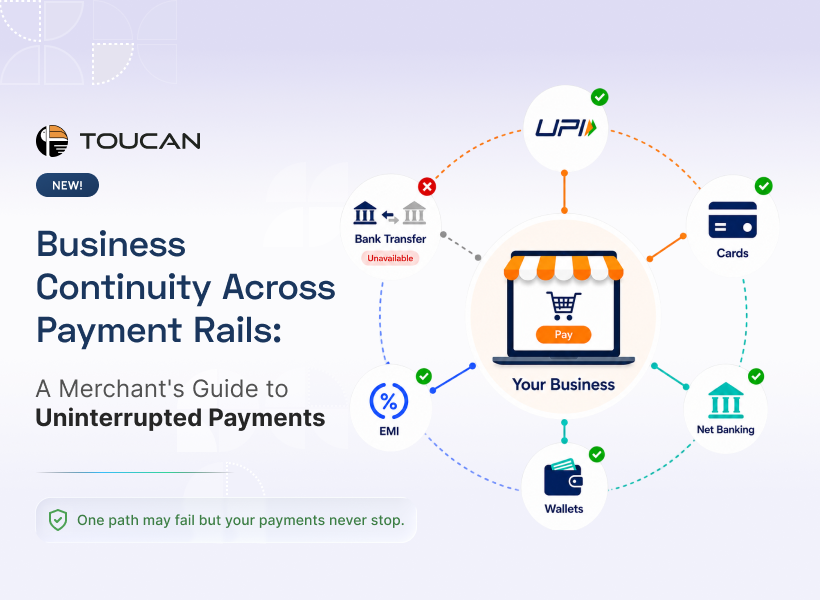
That’s why business continuity in payments has become a business priority rather than just an IT concern. By building a resilient payment infrastructure with multiple payment rails, intelligent routing, and automatic failover, businesses can continue accepting payments even when one payment path becomes unavailable.
In this guide, we’ll explain what business continuity in payments means, why it matters, and how merchants can build a payment infrastructure that keeps transactions flowing without interruption.
What Is Business Continuity in Payments?
Business continuity in payments is the ability to continue accepting, processing, and settling payments even when part of the payment ecosystem experiences a disruption.
The goal is simple: keep payments flowing, regardless of technical failures or unexpected outages.
Unlike disaster recovery, which focuses on restoring services after an incident, business continuity is about preventing disruptions from impacting customers in the first place.
For merchants, this means having backup payment routes, multiple banking partners, and intelligent systems that automatically redirect transactions when one payment path fails.
For example, if a card transaction cannot be processed through one acquiring bank, an intelligent payment platform can automatically route it through another available bank. The customer completes the payment without noticing anything unusual.
Understanding Payment Rails
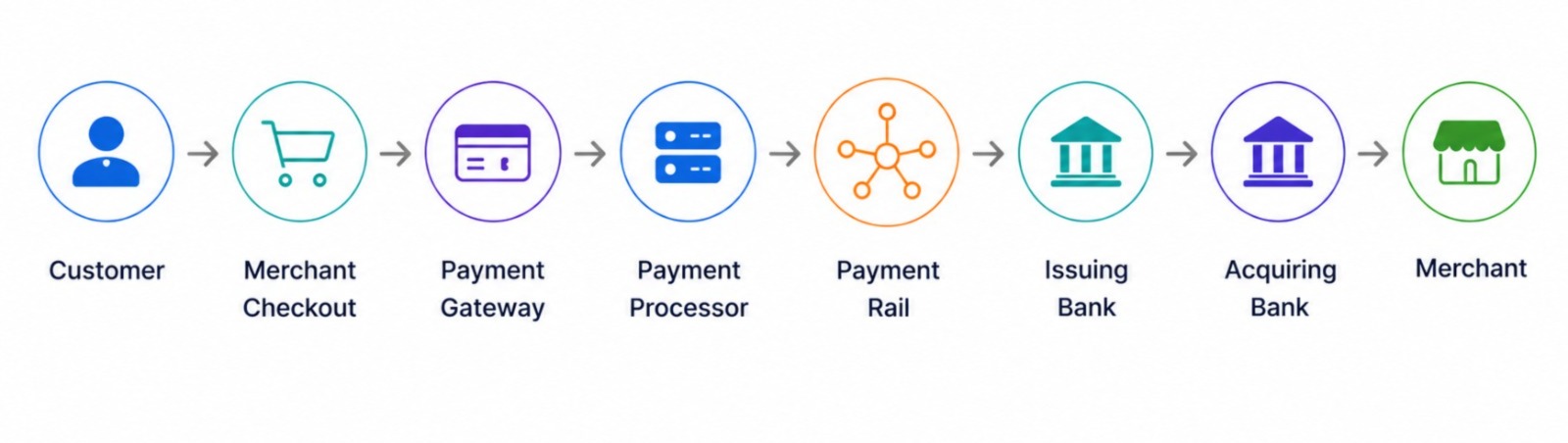
Payment rails are the financial networks that move money from the customer to the merchant. They form the backbone of every digital transaction, ensuring payments are authorized, processed, and settled securely.
A typical payment journey looks like this:
Common Payment Rails
The table below highlights the most widely used payment rails and their typical use cases in digital payments.
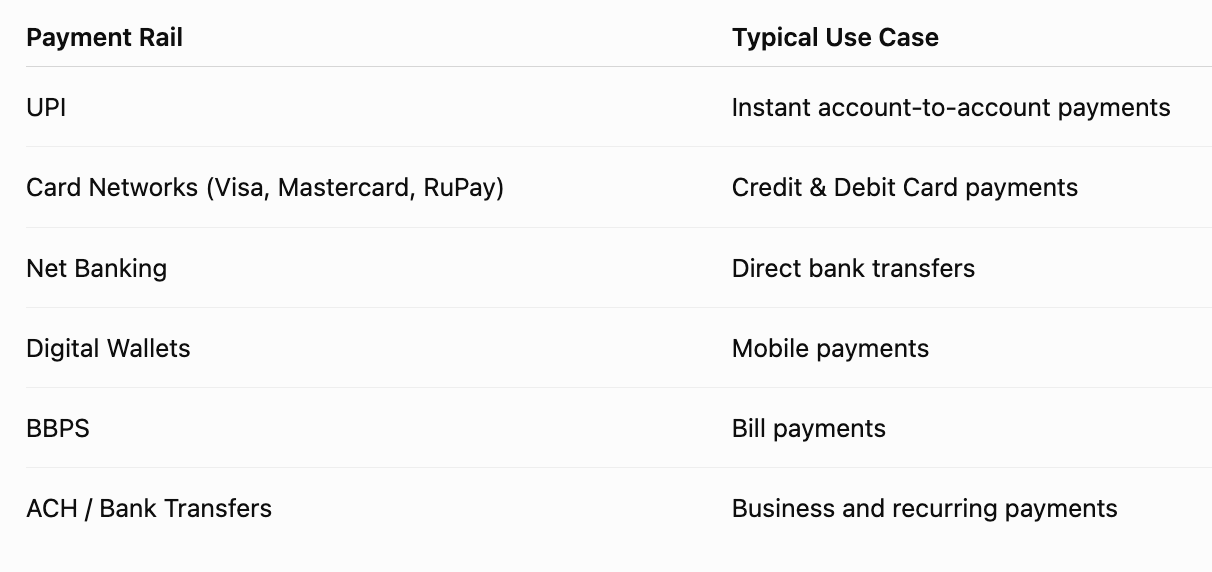
Each payment rail has different processing rules and availability. Relying on only one increases the risk of payment failures, while supporting multiple rails improves resilience.
Why Payment Continuity Matters More Than Ever
Digital payments have become the default for businesses across industries. Customers expect every transaction to be fast, secure, and successful—and they rarely wait if something goes wrong.
Payment continuity matters because it helps businesses:
1. Protect revenue: Every failed transaction is a potential lost sale.
2. Improve customer experience: Smooth payments increase trust and reduce cart abandonment.
3. Handle peak traffic: Multiple payment routes help maintain performance during flash sales, festive seasons, and admission periods.
4. Reduce operational risk: Backup payment paths minimize the impact of gateway or banking outages.
Businesses that invest in payment continuity aren’t just reducing downtime, they’re creating a more reliable payment experience that supports long-term growth.
Common Risks That Disrupt Payment Operations
Even the most reliable payment systems can experience unexpected disruptions. Understanding these risks helps businesses prepare for them.
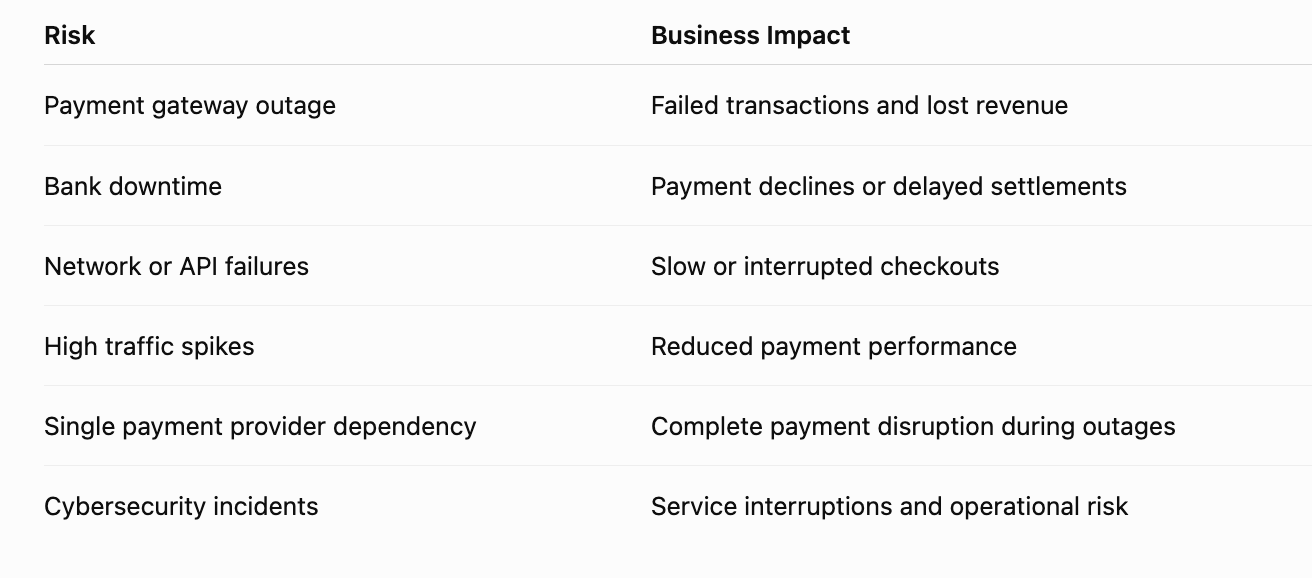
While these risks cannot always be prevented, their impact can be significantly reduced with the right payment infrastructure.
How Multi-Rail Payment Infrastructure Improves Resilience
A multi-rail payment infrastructure allows businesses to process transactions through multiple payment rails, gateways, and banking partners instead of relying on a single provider.
If one payment route becomes unavailable, transactions can be automatically redirected through another available route, helping businesses continue accepting payments without interruption.
1. Modern payment platforms improve resilience through:
2. Intelligent payment routing to select the best available payment path.
3. Automatic failover to switch transactions during outages.
4. Multiple acquiring bank connections to reduce dependency on a single bank.
5. Real-time monitoring to detect performance issues instantly.
6. Scalable infrastructure that supports high transaction volumes during peak demand.
Instead of waiting for systems to recover, merchants can continue processing payments with minimal impact on customers.
Best Practices for Merchants
Building payment continuity doesn’t have to be complicated. Start with these best practices:
1. Avoid relying on a single payment gateway or acquiring bank.
2. Support multiple payment methods and payment rails.
3. Use intelligent payment routing to improve transaction success rates.
4. Regularly monitor payment performance and failure rates.
5. Test your payment failover strategy before peak business periods.
6. A proactive approach today can prevent costly payment disruptions tomorrow.
How Toucan Payments Helps Businesses
At Toucan Payments, we’ve built our payment infrastructure with business continuity in mind.
Our payment orchestration capabilities help merchants connect with multiple payment processors and acquiring banks through a single platform. Intelligent routing, automatic failover, and real-time monitoring work together to improve payment success rates and reduce the impact of service disruptions.
Whether you’re processing thousands of daily transactions or managing peak seasonal demand, Toucan Payments helps your business deliver a reliable payment experience while maintaining operational resilience.
Conclusion
Payment disruptions are inevitable, but lost revenue and poor customer experiences don’t have to be. By adopting a resilient payment infrastructure with multiple payment rails, intelligent routing, and automatic failover, businesses can keep transactions flowing even when unexpected issues arise.
As digital payments continue to grow, business continuity is no longer just a technical requirement, it’s a competitive advantage. Investing in the right payment infrastructure today helps ensure your business stays available, reliable, and ready whenever customers choose to pay.
Ready for Uninterrupted Payments? Discover how Toucan helps maximize payment success, improve resilience, and ensure business continuity.
Frequently Asked Questions
Q1: What is business continuity in payments?
A: It is the ability to continue accepting and processing payments even when part of the payment ecosystem experiences a disruption.
Q2: What are payment rails?
A: Payment rails are the financial networks that enable money to move securely between customers, banks, and merchants.
Q3: Why should businesses use multiple payment rails?
A: Multiple payment rails reduce dependency on a single provider, improve payment success rates, and minimize downtime during outages.
Q4: What is payment failover?
A: Payment failover automatically redirects transactions to an alternative payment route when the primary route becomes unavailable.
Q5: How can merchants improve payment continuity?
A: Businesses can improve continuity by using multiple payment partners, intelligent routing, automatic failover, and real-time payment monitoring.