April 2nd Week Edition, 2026| FinTech Flight Weekly
Happy Thursday,
Global Fintech news to India’s fintech industry insights: Catch the full update in our Latest Newsletter👇
Each week, we bring you the top fin-tastic updates shaping the future of finance and technology. From policy shifts to money trends worth tracking, we’ve got everything you need to stay ahead when Finance meets Tech.
👉 Follow Toucan Payments on LinkedIn for your weekly edge.
🔍 Curious about what we do? Explore more at toucanpay.in
Toucan’s Top Fin-tastic Updates
Monzo exits the US market
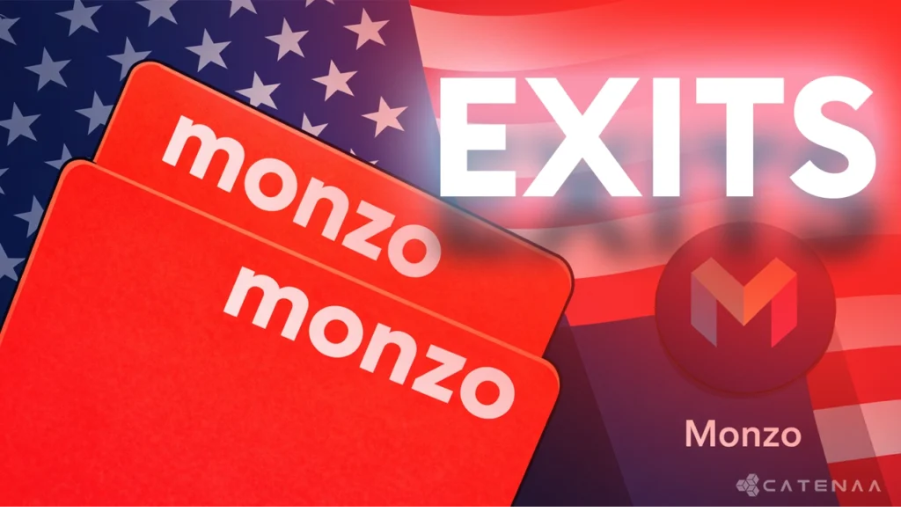
Monzo announced its US exit on March 31, 2026, ending a six-year effort to crack the American market. The UK digital bank stopped new US customer sign-ups immediately, laid off about 50 US employees, and will wind down existing accounts by June 2026.
Reasons
Monzo called it a strategic decision to prioritise its 15 million UK customers and EU growth opportunities unlocked by the new license. US operations drained resources without a charter, while Europe now offers deposit-taking, lending, and capital access across 27 countries.
Impact on Stakeholders:
🔷 Monzo Employees: ~50 US staff laid off; UK/EU teams gain resources for expansion.
🔷 US Customers: Accounts usable until June 2026; limited service as no new onboarding.
🔷 Investors: Signal of capital discipline and focus on profitable core markets; supports path to deposit-funded growth in Europe.
🔷 Partners (e.g., US banks): End of partnership model; potential revenue loss from Monzo volume.
🔷 Competitors (Revolut): Opportunity for Revolut (filing for US charter) to consolidate.
Why does this news matter?
This shows digital banks maturing to disciplined allocation, focusing on where regulatory assets (like Monzo’s EU license) maximise returns. It highlights US barriers (no license, high costs) versus Europe’s openness, influencing fintech expansion strategies globally. For payments/fintech leaders, it underscores profitability over hype in cross-border plays.
Fi Money, the Indian neo-bank, shuts down its banking business

Fi Money, an Indian neobank founded by ex-Google Pay executives, is discontinuing its consumer banking services after four years. Customers must now access their Federal Bank savings accounts via the bank’s FedMobile app, as the Fi app phases out banking features.
Reasons
Fi to build “deep technology” and AI systems for startups and enterprises, a B2B pivot. Founders noted unsustainable unit economics in consumer neobanking, where marketing didn’t yield loyalty amid RBI regulations and competition from Jupiter, FamPay, and banks. New account openings stopped immediately; full wind-down by April 1, 2026.
Impact on Stakeholders:
🔷 Customers (3.5M+): Funds safe and transferable to FedMobile; disrupted UX, potential loyalty loss, but no balance issues.
🔷 Employees: Further layoffs post – 50+ cuts; shift to AI/B2B roles for survivors.
🔷 Investors (Peak XV, etc.): Write-down risk on $168M invested; validates caution on India neobanks.
🔷 Federal Bank: Ends partnership revenue; gains direct customer access for cross-sell.
🔷 Competitors: Boost for Jupiter, Niyo; reinforces partner-bank model’s limits without NBFC license.
Why does this news matter?
This is the clearest signal yet that India’s neobank model, reliant on bank partnerships without owning deposits or lending licenses, struggles with profitability amid RBI scrutiny and customer churn. It accelerates a B2B/AI pivot trend (seen in Slice, Open), urging investors to favour infrastructure over consumer apps. For payments strategy, it highlights execution risks in digital-first banking.
Agentic AI Takes Over Indian Fintech: Finnable’s Fiya Delivers Proactive “Fintelligence” and Risk Prediction

Background
Agentic AI differs from chatbots in that it autonomously executes actions: accessing backend systems, making decisions, and learning from outcomes. Finnable’s Fiya integrates with its lending stack to provide support, fraud detection (blocking 450+ attempts via photo-matching), and document processing (92K+ files, saving ₹12 lakh annually).
Impact on Stakeholders:
🔷 Customers: Faster resolutions, personalised “Fintelligence,” lower friction in lending/support.
🔷 Finnable/Fintechs: 60% faster TAT, 40% higher approvals, 25% profitability boost; competitive edge.
🔷 Employees: Shift from routine tasks to oversight; reduced workload in high-volume ops.
🔷 Regulators (RBI): Aids fraud control, inclusion; needs explainability frameworks.
Why does this news matter?
Agentic AI addresses India’s fintech pain points, scale, fraud, and personalisation. At UPI’s volume, enabling distributed intelligence for real-time decisions without human bottlenecks, aligning with RBI’s Vision 2028 cyber/resilience focus. This positions India as a global AI-finance hub.