April 1st Week Edition, 2026| FinTech Flight Weekly
Happy Thursday,
Global Fintech news to India’s fintech industry insights: Catch the full update in our Latest Newsletter👇
Each week, we bring you the top fin-tastic updates shaping the future of finance and technology. From policy shifts to money trends worth tracking, we’ve got everything you need to stay ahead when Finance meets Tech.
👉 Follow Toucan Payments on LinkedIn for your weekly edge.
🔍 Curious about what we do? Explore more at toucanpay.in
Toucan’s Top Fin-tastic Updates
Mastercard Eyes Sale of $3.2B Nets Real-Time Payments Unit

Mastercard is exploring the sale of its real-time payments unit, acquired from Denmark’s Nets Group in 2019 for $3.2 billion, which handles clearing, instant payments, and e-billing.
Impact on Stakeholders:
🔷 Mastercard: Frees capital (~$3B+ potential recovery) for crypto/blockchain bets; sheds underperformer
🔷 PE Buyers: Low-entry buyout of stable RTP assets in Europe; synergies with paytech.
🔷 Merchants/Banks: Potential continuity or PE-driven innovation in Nordic instant payments.
🔷 Customers: Corporate clients and merchants using Nets RTP (Sweden, Denmark, Finland, Norway) expect service continuity via transition services agreements (TSAs), as seen in Mastercard’s 2020 Nets carve-outs.
Why does this news matter?
The move signals Mastercard’s pivot from traditional A2A rails to high-growth areas like stablecoins and blockchain, highlighted by its recent $1.8B BVNK acquisition for tokenized payments. It underscores maturing RTP markets where PE sees consolidation value, while giants optimize portfolios.
Pine Labs to Launch Stablecoin Prepaid Cards in 9 Middle East, Africa, SEA Markets by April End

This marks the first major Indian payments firm’s push into crypto-linked consumer payments outside India and China, where stablecoins face regulatory hurdles. Users fund the card from digital wallets with stablecoins like USDT/USDC, enabling instant local currency conversion at POS for seamless merchant fiat settlements.
Impact on Stakeholders:
🔷 Pine Labs: Revenue growth (Q3 FY26 up 24% to $814M); competitive edge vs Stripe/PayPal.
🔷 Merchants/Consumers: Frictionless stablecoin spending in stablecoin-friendly regions; faster, cheaper cross-border.
🔷 Regulators/Competitors: Signals Indian fintech globalization; pressure on PhonePe/Paytm; highlights regulatory divergence (no India/China launch)
Why does this news matter?
This taps a $310B+ stablecoin market booming for cross-border payments, outpacing traditional rails amid volatility and FX costs. It positions Pine Labs, already at 17% international revenue, to lead Indian fintechs in AI, stablecoins, and global expansion, avoiding domestic RBI concerns on monetary policy and illicit flows.
NPCI extends the 30% market share cap deadline for TPAPs to December 2026
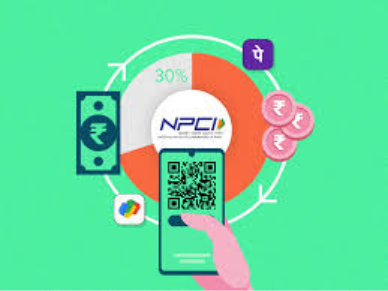
The National Payments Corporation of India extended the deadline for third-party UPI apps (TPAPs) to comply with the 30% market share cap on transaction volumes to December 31, 2026. Originally set in 2020 to curb concentration risks, this is the third extension. It provides dominant market players PhonePe (47-50% share) and Google Pay (37%) more adjustment time.
Impact on Stakeholders:
🔷 NPCI/RBI: Maintains UPI momentum; monitors compliance risks without abrupt halts.
🔷 Dominants (PhonePe, Google Pay): Breathing room to reduce share via incentives limits; no immediate user onboarding bans
🔷 Challengers (Paytm, Navi, etc.): More growth window; potential for market share gains pre-2027 enforcement
🔷 Users/Banks: Uninterrupted service; sustained low-cost P2P/PoS adoption
🔷 Investors/Ecosystem: Stability boosts confidence; delays diversification but supports 10x growth potential
Why does this news matter?
This helps UPI sustain its explosive growth (13B+ monthly transactions) by avoiding disruptions from forced compliance, prioritizing scale over immediate competition in India’s 1B+ user digital payments ecosystem. It balances ecosystem health against the dominance of two players holding an 85%+ share, fostering gradual diversification amid RBI’s innovation push.