May 4th Week Edition, 2026| FinTech Flight Weekly
Happy Thursday,
From global fintech headlines to key developments in India’s ecosystem—catch it all in our latest newsletter 
Every week, we break down the trends shaping the future of finance and tech. Policy updates, payment innovations, and market shifts—everything you need to stay ahead.
 Follow Toucan Payments on LinkedIn for weekly insights.
 Curious about what we do? Explore more at toucanpay.in
Toucan’s Top Fin-tastic Updates
NPCI to roll out one Soundbox for all UPI apps: What it means for retail payments
NPCI is planning to introduce a unified interoperable Soundbox system for UPI merchants, allowing businesses to use a single Soundbox across all UPI apps like PhonePe, Paytm, BharatPe, and others.
What is it?
Currently, merchants need separate QR codes and separate Soundboxes for each payment provider, increasing monthly subscription costs and operational complexity. NPCI’s proposed interoperable Soundbox will allow all UPI transaction confirmations—irrespective of app or QR code—to be managed through one device. Merchants can register the Soundbox on any payment app and link multiple QR codes to it.
Stakeholder Impacts
 Merchants/Small Businesses: Reduces hardware and subscription costs by eliminating the need for multiple Soundboxes, simplifying payment operations.
UPI Apps (PhonePe, Paytm, BharatPe): Could impact an important revenue stream as Soundbox subscriptions currently help offset the zero MDR model in UPI payments.
Smaller FinTech Players: May face additional pressure as reduced device revenue weakens already fragile monetisation models.
NPCI & UPI Ecosystem: Pushes interoperability and standardisation further, improving merchant convenience and driving wider UPI adoption at scale.
Why does this news matter?
This move could significantly streamline offline digital payments for India’s merchants while reinforcing NPCI’s vision of a unified UPI ecosystem. However, it also raises concerns around the long-term sustainability of UPI business models under zero MDR, especially for smaller payment providers dependent on device-based revenues. With India processing over 22 billion UPI transactions monthly, the shift may reshape how payment companies monetise merchant services in the future.
RBI proposes rules to let lenders disable phones for loan defaults
The RBI has proposed new rules that could allow lenders to disable certain mobile phone functions if borrowers default on loans used to finance those devices. The framework is expected to take effect from October 2026 as part of broader reforms around digital lending recovery practices.
What is it?
Under the proposed guidelines, lenders financing smartphones may be permitted to restrict non-essential phone features when borrowers fail to repay loans. However, the RBI has clarified that critical services such as emergency calls, banking access, and essential communication functions cannot be blocked.
The framework introduces a regulated and phased approach, ensuring restrictions are proportionate and transparent. Alongside device controls, RBI has also proposed stricter recovery conduct rules, including certified recovery agents, borrower consent requirements, data privacy safeguards, and enhanced customer protection mechanisms.
Stakeholder Impacts
Lenders & NBFCs: Provides a new digital recovery mechanism for device-financed loans, potentially reducing defaults and improving repayment discipline.
Borrowers/Consumers: Raises concerns around digital access and user rights, while also introducing clearer recovery protections and transparency norms.
Smartphone Financing Ecosystem: Could encourage more confidence in EMI-based device financing, especially in lower-ticket consumer lending segments.
FinTech & Digital Lending Players: Will need to strengthen compliance, customer communication, consent management, and responsible recovery processes.
Why does this news matter?
This marks one of the RBI’s most significant steps toward regulating technology-enabled loan recovery in India’s rapidly growing digital lending market. The proposal balances innovation in credit enforcement with consumer protection, potentially reshaping how device financing, BNPL, and smartphone lending products operate in the future. It also signals RBI’s increasing focus on responsible digital lending and data privacy standards.
Paytm launches ‘Pocket Money’ for teens with parent-controlled UPI Payments
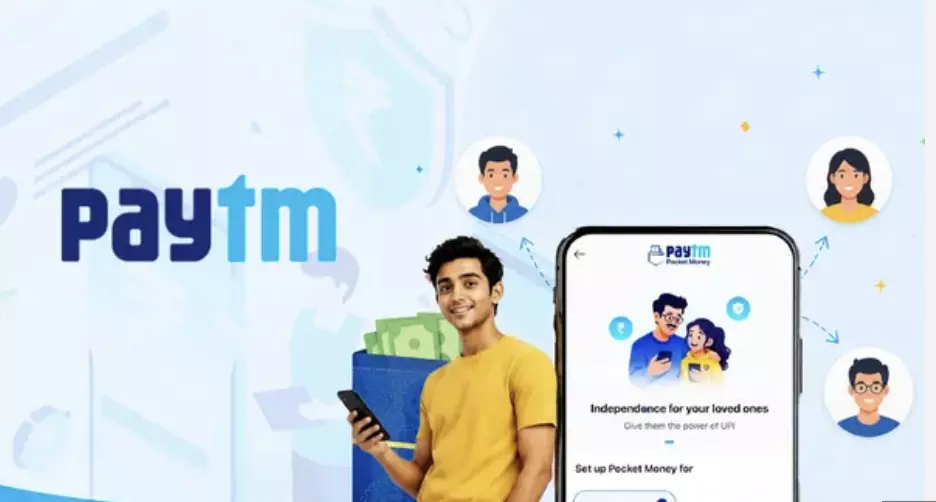
Paytm has launched “Pocket Money,” a parent-controlled UPI feature for teenagers, enabling supervised digital payments without requiring teens to own a personal bank account.
What is it?
Pocket Money allows teenagers to make UPI payments using parent-linked accounts under the UPI Circle framework. Parents act as the “Primary User,” while teenagers become “Secondary Users” with controlled spending access through their own smartphones. Payments for metro rides, food delivery, gaming subscriptions, shopping, and mobile recharges can be made independently by teens, while funds are deducted directly from the parent’s bank account.
The feature includes built-in safeguards such as transaction limits, onboarding restrictions, device lock protection, spending summaries, and real-time parental controls. Teenagers can spend up to ₹5,000 per transaction with a monthly cap of ₹15,000, while international transactions and cash withdrawals are disabled.
Stakeholder Impacts
Parents & Families: Provides greater convenience and visibility into teen spending through real-time tracking, spending limits, pause/revoke controls, and categorized expense summaries.
Teenagers: Encourages financial independence and familiarity with digital payments in a secure and supervised environment.
Paytm & FinTech Ecosystem: Strengthens Paytm’s position in family-focused digital banking while expanding adoption of UPI Circle-based payment models among younger users.
Banks & UPI Infrastructure: Drives broader use cases for UPI beyond traditional bank-account holders, potentially increasing transaction volumes within regulated frameworks.
Why does this news matter?
This launch highlights the growing shift toward supervised digital payment ecosystems for younger users in India. As teens increasingly engage with online commerce, gaming, subscriptions, and app-based services, fintech companies are building products that balance convenience with parental oversight. The move could accelerate early digital payment adoption while opening a new growth segment for India’s UPI ecosystem.