May 1st Week Edition, 2026| FinTech Flight Weekly
Happy Thursday,
From global fintech headlines to key developments in India’s ecosystem—catch it all in our latest newsletter 
Every week, we break down the trends shaping the future of finance and tech. Policy updates, payment innovations, and market shifts—everything you need to stay ahead.
 Follow Toucan Payments on LinkedIn for weekly insights.
🔍 Curious about what we do? Explore more at toucanpay.in
Toucan’s Top Fin-tastic Updates
Adyen to Acquire Talon.One

Dutch paytech Adyen has agreed to acquire Talon.One, a Berlin‑based loyalty and incentives SaaS platform, for €750 million. Talon.One provides an API‑driven loyalty engine used by about 300 global merchants (including brands such as Adidas and Nordstrom).
Impact on Stakeholders:
1. Adyen (paytech platform): For Adyen, this acquisition is a strategic expansion beyond payments into customer‑engagement and promotional decisioning.
2. Merchants (retailers, brands, e‑commerce): Merchants gain a single customer identity across online and in‑store, with dynamic, real‑time offers applied at checkout based on who the shopper is and what they buy. This improves conversion, retention, and lifetime value by turning payments into a personalized promotional moment.
3. Competitors (other acquirers, gateways, loyalty SaaS): Other payment providers face higher pressure to match “loyalty‑at‑the‑acquirer” functionality, pushing them to build, buy, or partner on real‑time decisioning stacks.
4. Customers and shoppers: Shoppers get more personalized, frictionless offers at checkout and a smoother omnichannel rewards experience across channels.
5. Talon.One’s team: The acquisition gives Talon.One access to Adyen’s global scale, capital, and merchant base, accelerating deployment and data‑driven refinement of its decisioning models.
Why does this news matter?
This deal matters because it moves loyalty and promotions closer to the payment layer, turning a “background” SaaS module into a core decision engine inside the transaction. It shows that large payment providers are no longer content with just processing transactions; they want to own the moment of purchase decision through data, identity, and real‑time rules.
American Express Acquires Hyper

American Express is buying Hyper, an agentic AI expense-management startup, to deepen its commercial-services and corporate-spend automation offering.
Hyper builds AI agents for expense workflows, including categorizing transactions, checking policy compliance, generating reports, and nudging employees on overdue submissions.
Impact on Stakeholders:
 American Express (issuer & platform): For American Express, acquiring Hyper is a strategic move to embed agentic AI more deeply into its commercial services and expense‑management stack. It helps Amex strengthen its position in corporate spend automation, moving beyond cards into workflow‑centric software that sits between companies and their finance teams.
Hyper’s employees and founders: For Hyper’s team and founders, the acquisition offers scale, stability, and access to a global payments infrastructure and customer base. Instead of building distribution and compliance capabilities from scratch, they can now plug their AI agents into Amex’s existing issuer rails, global footprint, and enterprise sales channels.
Corporate customers: For businesses using Amex corporate cards or expense products, Hyper’s AI capabilities should translate into measurable operational gains. Employees will likely see automated expense categorization, policy‑check nudges, and faster approvals, reducing friction in submitting and recovering business spend.
Individual employees and cardholders: For employees and cardholders, Hyper’s AI assistant can make business travel and day‑to‑day expenses feel less bureaucratic. Smarter categorization, real‑time policy feedback, and automated reporting can cut down on tedious receipt‑uploading and manual form‑filling.
Competitors and fintech peers: For competitors in expense management, corporate cards, and AI‑driven accounting tools, the Amex–Hyper move raises the bar. It becomes harder for standalone expense SaaS players to compete when a large issuer bundles payments with AI‑driven workflows in one stack.
Why does this news matter?
This matters because corporate payments are becoming a battleground for agentic AI, not just card issuance or expense tracking. Amex is signaling that it wants to own more of the workflow around business spend.
It also shows a broader fintech trend: large incumbents are increasingly acquiring specialized AI startups instead of building every capability in-house.
Paytm Payments Bank License Cancelled
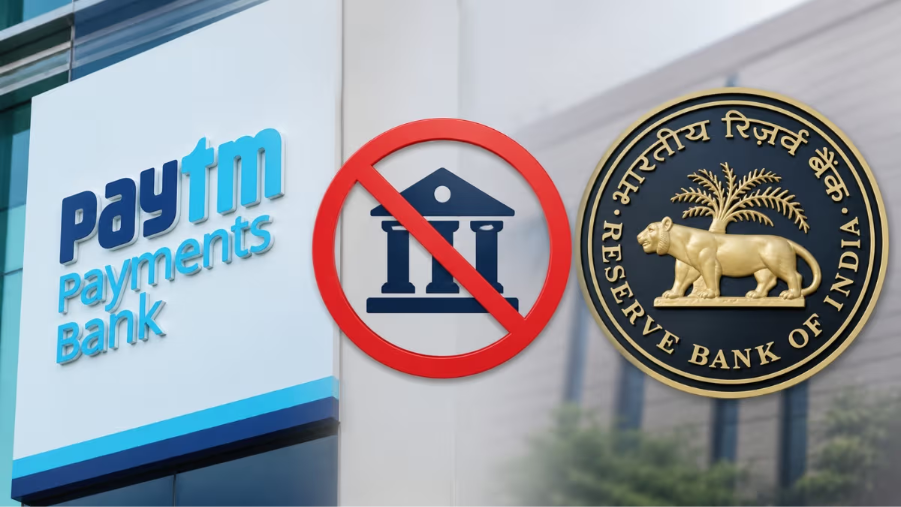
On 24 April 2026, the Reserve Bank of India (RBI) effectively shut down Paytm Payments Bank Limited (PPBL) by cancelling its banking licence under Section 22(4) of the Banking Regulation Act, 1949. The RBI cited persistent non‑compliance with licensing conditions, serious lapses in governance, and conduct of business that was detrimental to the interest of the bank and its depositors.
Impact on Stakeholders:
RBI and financial system regulators: The RBI uses this move to send a clear enforcement message: even tech‑first or payments‑bank entities must meet core banking‑governance, KYC, and fund‑flow standards.
Paytm (One97 Communications): The licence cancellation forces Paytm to rely on external banking partners for UPI, deposits, and wallet‑like structures. While core app operations are unaffected, the loss of an internal banking stack and reputational hit could dent trust among mass‑retail users.
Merchants and business partners: For merchants, the shift is largely back‑end: Paytm to reroute flows through partner banks, ensuring continuity of transactions and UPI via alternate handles. Some short‑term integration and reconciliation friction is possible.
Customers and depositors: RBI confirms Paytm Payments Bank has enough liquidity to repay depositors, so formal depositors are expected to recover their funds through the winding‑up process. Though it shakes the perception that a fintech app can safely act like a bank.
Competing fintechs and banks: The episode is a cautionary case against blending payments, quasi‑loans, and balance‑sheet‑style structures without strong governance and compliance.
Why does this news matter?
This episode matters because it shows how India’s early‑stage payments‑bank experiment can end in regulatory enforcement if the entities do not meet core banking‑governance standards.
More broadly, it signals to the fintech and payments ecosystem that trust, compliance, and governance are non‑negotiable foundations.