Payment orchestration for high-growth e-commerce brands
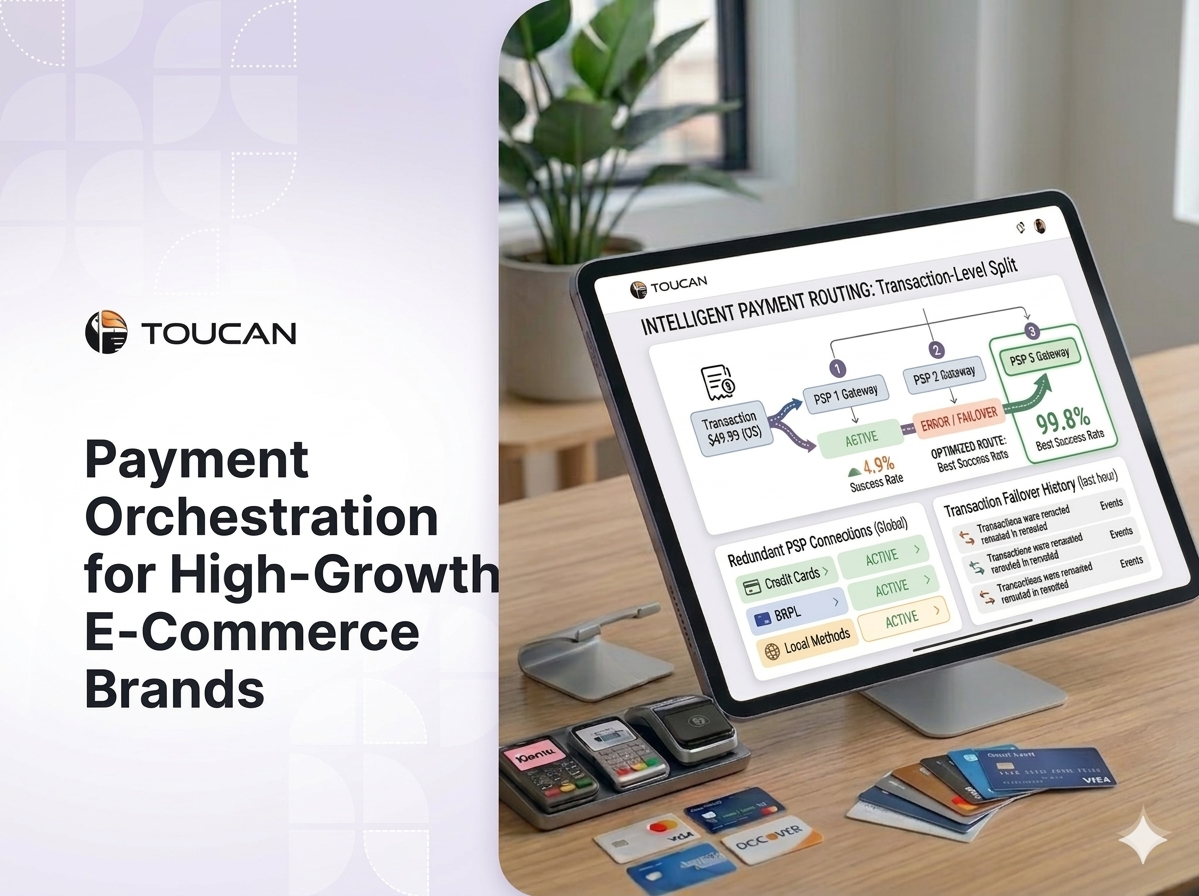
High-growth e-commerce brands do not just need a payment stack that works, they need one that scales. As order volumes rise, customer geographies expand, and payment methods multiply, managing payments through a single gateway or disconnected stack can quickly create friction. Payment orchestration gives merchants a smarter way to handle this complexity by connecting multiple payment providers, routing transactions intelligently, and improving overall payment performance.
For growing online businesses, this is no longer just a technical upgrade. It is a strategic advantage that can improve approval rates, reduce payment failures, lower costs, and support international expansion.
What is payment orchestration?
Payment orchestration is the layer that sits on top of your payment infrastructure and intelligently manages how transactions move through different gateways, acquirers, payment methods, and fraud tools. Instead of relying on one provider, merchants can connect multiple options and use rules-based or AI-driven logic to determine the best route for each transaction.
Think of it as air traffic control for your money. Every transaction gets directed to the runway most likely to land it safely, at the lowest cost, in the shortest time.
Key benefits of payment orchestration
1. Higher payment approval rates
One of the biggest benefits of payment orchestration is improved authorization performance. Smart routing can send transactions to the provider most likely to approve them based on geography, card type, transaction value, or issuer response patterns. If one gateway fails, fallback logic can retry the payment through another route without forcing the customer to start over.
2. Lower payment costs
Different gateways and acquirers charge different fees depending on region, payment method, and transaction type. Payment orchestration enables merchants to route payments based not only on approval likelihood but also on cost efficiency.
3. Better checkout experience
A smooth checkout experience is critical for conversion. Payment orchestration allows brands to present the right local payment methods, reduce transaction failures, and keep customers from bouncing due to payment friction.
4. Easier global expansion
When a brand expands into new countries, payment complexity rises fast. Consumers in different markets expect different payment methods, currencies, and checkout experiences. Payment orchestration helps brands adapt quickly by supporting multi-currency processing, local acquiring, and region-specific payment preferences without rebuilding the entire stack.
5. Unified reporting and reconciliation
One of the most overlooked benefits of orchestration is operational clarity. Instead of pulling reports from multiple gateways and manually reconciling data, teams can use a unified dashboard to track performance, settlement, refunds, and payment failures.
When Is the Right Time to Adopt Payment Orchestration?
You don’t need to be processing millions of orders to benefit. Here are signals that it’s time:
➤ Your cart abandonment rate is climbing, and you suspect payment friction is a factor.
➤ You’re expanding to new countries or adding new payment methods regularly.
➤ Failed transactions are costing you more than a minor inconvenience.
➤ You’re spending too much engineering time maintaining multiple provider integrations.
➤ You want to A/B test payment providers to find the best-performing setup.
➤ Your reconciliation process involves stitching together data from multiple dashboards.
Conclusion
High-growth e-commerce brands cannot afford to treat payments as a back-office function. As operations become more global and customer expectations rise, payment orchestration becomes essential for improving approval rates, reducing costs, and delivering a better checkout experience.
Ready to orchestrate smarter payments? Explore ToucanPay’s payment orchestration platform →
Frequently Asked Questions
Q1: What is payment orchestration?
A: Payment orchestration is the process of using a centralized layer to route, manage, and optimize transactions across multiple payment providers and methods.
Q2: How does payment orchestration improve approval rates?
A: It uses smart routing and fallback logic to send each transaction to the provider most likely to approve it, reducing avoidable declines and failed payments.
Q3: Is payment orchestration only for large businesses?
A: No. While it is especially valuable for high-growth and enterprise brands, any merchant dealing with multiple providers, international customers, or payment complexity can benefit.
Q4: Does payment orchestration replace a payment gateway?
A: Not exactly. It works with gateways and acquirers, adding an intelligence layer that improves routing, visibility, and control.