Regulated Collections in India: Reduce Operational Risk Without Slowing Down
Introduction
Collecting payments should be one of the simplest parts of running a business.
Yet for finance teams, it often becomes one of the biggest operational challenges.
Payments arrive through multiple channels. Settlement timelines vary between banks. Reconciliation takes hours—or even days. Compliance requirements continue to evolve. And when transaction volumes increase, manual processes quickly become a source of operational risk.
The result?
Delayed settlements, unmatched transactions, audit challenges, and poor visibility into cash flow.
As India’s digital payment ecosystem grows, businesses need more than faster payments. They need regulated, automated, and transparent collection processes that minimize risk while keeping operations efficient.
In this article, we’ll explore the operational risks behind payment collections, why regulation matters, and how modern payment infrastructure helps businesses scale securely.
What Are Regulated Payment Collections?
Regulated payment collections are payment collection processes designed to meet the regulatory and operational requirements established by the Reserve Bank of India (RBI), payment networks, banking partners, and applicable industry standards.
Unlike basic payment acceptance, regulated collections emphasize:
• Secure payment processing
• Customer consent management
• Authentication
• Transaction traceability
• Data protection
• Settlement transparency
• Audit readiness
• Risk controls
Why Regulated Collections Matter More Than Ever
India processes billions of digital payment transactions every month. Customers expect payments to complete instantly. Finance teams expect accurate settlements. Regulators expect transparency. Meeting all three expectations simultaneously isn’t easy.
Businesses today collect payments through multiple sources:
• UPI
• Cards
• Net Banking
• Wallets
• BBPS
• QR Payments
• Payment Links
Each payment rail follows different settlement cycles, reconciliation formats, and compliance requirements.
Without a centralized collection infrastructure, finance teams spend significant time identifying payment discrepancies instead of focusing on business growth.
The Hidden Operational Risks in Payment Collections
Most payment issues aren’t caused by failed transactions. They’re caused after the payment succeeds. Some of the most common operational risks include:
1. Delayed Reconciliation
Finance teams manually compare payment reports from multiple providers.
This delays financial reporting and increases operational costs.
2. Settlement Visibility Gaps
A payment may be successful, but businesses often don’t know exactly when funds will arrive.
This uncertainty impacts:
• Working capital
• Vendor payments
• Treasury planning
• Cash flow forecasting
3. Compliance Complexity
Every transaction generates records that must be retained for audits, regulatory reporting, and dispute resolution.
Manual processes make compliance increasingly difficult as transaction volumes grow.
4. Multiple Payment Providers
Businesses frequently integrate several gateways to improve success rates.
Instead of simplifying operations, this often creates disconnected reports, separate dashboards, and inconsistent settlement processes.
5. Human Errors
Manual reconciliation, spreadsheets, and repetitive verification tasks increase the risk of:
• Duplicate entries
• Missing transactions
• Incorrect settlements
• Audit discrepancies
What Makes a Modern Regulated Collections Platform Different?
A regulated collections platform doesn’t simply collect payments. It orchestrates every stage of the payment lifecycle.
Instead of managing multiple disconnected systems, businesses operate through a unified platform that provides complete visibility and control.
Key capabilities include:
1) Intelligent Payment Routing
Automatically route transactions through the most suitable payment partner based on availability, cost, or success rates.
Benefits include:
• Higher payment success rates
• Reduced downtime
• Improved customer experience
2) Automated Reconciliation
Transactions are matched automatically across payment gateways, banks, and internal systems.
Finance teams no longer spend hours comparing reports manually.
3) Real-Time Settlement Tracking
Know exactly:
• Which payments succeeded
• Which are pending settlement
• Expected settlement timelines
• Amounts credited
This improves financial planning and reduces uncertainty.
4) Built-In Compliance Controls
Modern platforms automatically maintain:
• Transaction logs
• Audit trails
• Settlement history
• Regulatory records
This simplifies compliance without adding operational overhead.
5) Unified Payment Dashboard
Instead of logging into multiple systems, finance teams gain one centralized view of:
• Collections
• Settlements
• Reconciliation
• Exceptions
• Reports
• Payment performance
Building a Low-Risk Collections Workflow
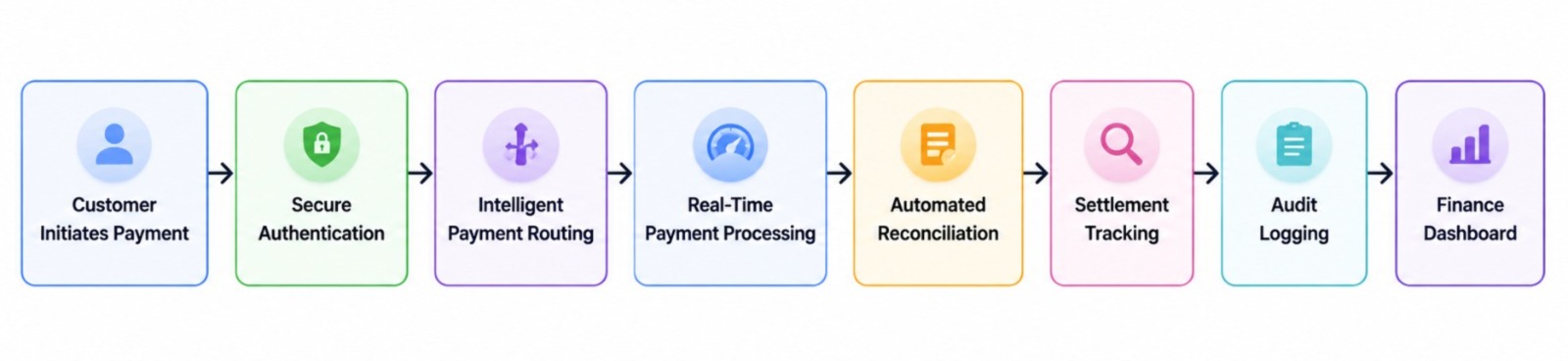
A resilient collections workflow should look like this:
Technology Behind Modern Regulated Collections
The best collection platforms rely heavily on automation rather than manual intervention. Core technologies include:
Connect multiple payment gateways through one integration while optimizing routing and failover automatically.
ii) API-First Architecture
Seamlessly integrate with ERP, CRM, accounting software, banking systems, and merchant applications.
iii) Real-Time Event Notifications
Receive instant updates for:
• Payment status
• Settlement progress
• Refunds
• Chargebacks
• Failed transactions
iv) Automated Exception Handling
Identify failed settlements, duplicate payments, and reconciliation mismatches automatically before they become larger financial issues.
v) Scalable Cloud Infrastructure
Handle seasonal spikes and growing payment volumes without impacting operational performance.
Conclusion
As digital payment volumes continue to grow, operational efficiency becomes just as important as payment acceptance.
Businesses that still rely on fragmented payment systems and manual reconciliation expose themselves to unnecessary financial risk, compliance challenges, and delayed settlements.
Modern regulated collections platforms combine automation, orchestration, reconciliation, and real-time visibility into a single workflow—helping finance teams spend less time managing payments and more time driving business growth.
Whether you’re processing domestic payments, managing BBPS collections, or scaling cross-border operations, investing in the right collection infrastructure is essential for building resilient, compliant, and future-ready payment operations.
Ready to simplify regulated collections?
Book a demo with Toucan Payments to automate reconciliation, gain real-time settlement visibility, and reduce operational risk.
Frequently Asked Questions
Q1: What are regulated collections?
A: Regulated collections refer to payment collection processes that comply with applicable financial regulations while ensuring secure transaction processing, transparent settlements, accurate reconciliation, and complete auditability.
Q2: Why is payment reconciliation important?
A: Payment reconciliation ensures that every incoming payment matches settlement records, helping businesses reduce financial discrepancies, improve reporting accuracy, and simplify audits.
Q3: How does payment orchestration improve collections?
A: Payment orchestration connects multiple payment providers through a unified platform, enabling intelligent routing, higher payment success rates, automated failover, and centralized transaction management.
Q4: How can Toucan Payments help businesses manage regulated collections?
A: Toucan Payments helps businesses automate payment collections, reconciliation, settlement tracking, and compliance reporting through a unified, API-first platform designed to reduce operational risk and improve payment visibility.