Does Your Business Need Payment Orchestration? 10 Questions to Ask
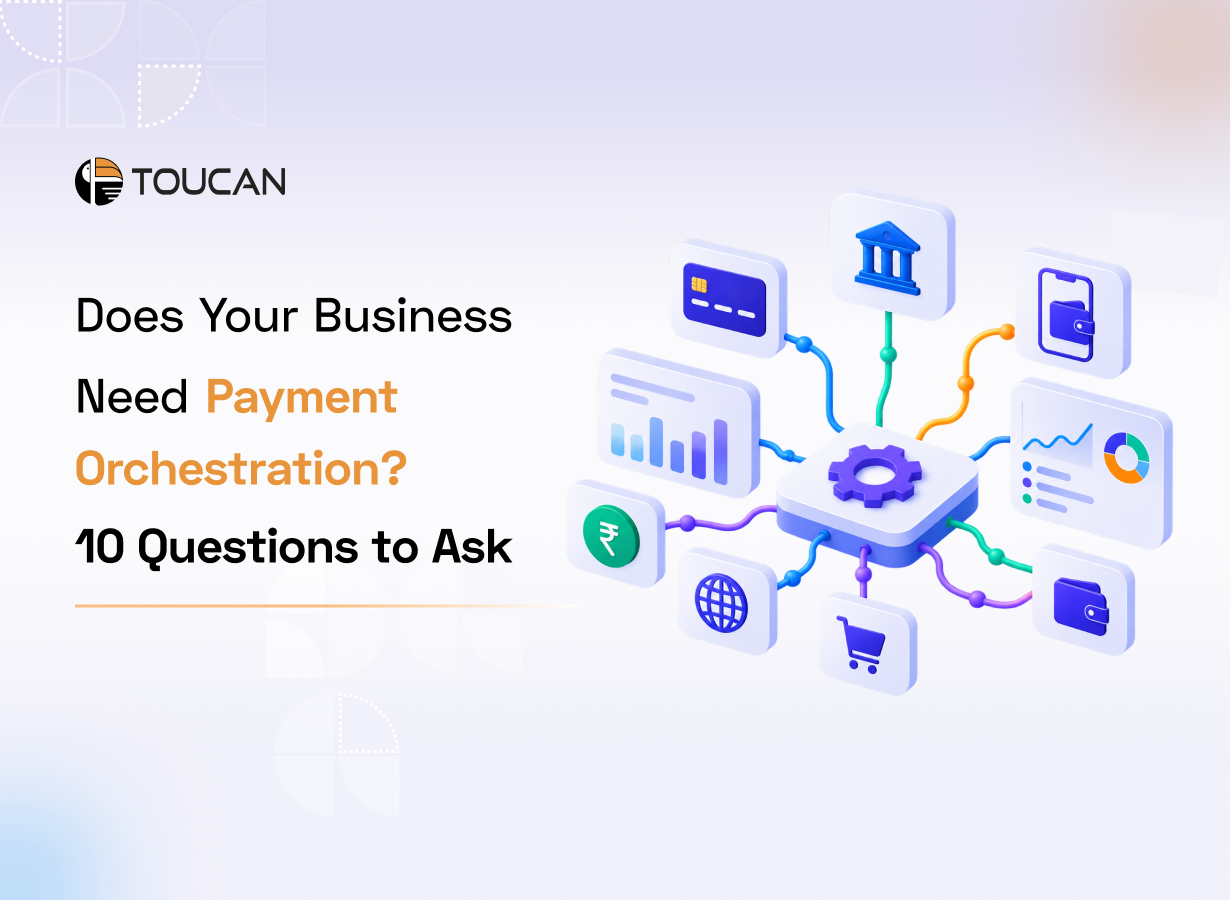
As businesses grow, payment processing can become more complicated than simply connecting a payment gateway to a website.
A business may start with one payment gateway and a few payment methods. But as transaction volumes increase, customers move across markets, and more payment options are added, managing payments through a single provider can create new challenges.
Payment failures, limited payment method coverage, complicated reconciliation, multiple integrations, and dependency on one provider can all affect the payment experience. This is where payment orchestration can become useful.
But does every business actually need payment orchestration? Not necessarily.
The right question is whether your current payment infrastructure can support your business goals without creating unnecessary complexity. Here are 10 questions that can help you evaluate whether payment orchestration makes sense for your business.
What Is Payment Orchestration?
Payment orchestration is a technology layer that connects a business with multiple payment service providers, payment gateways, processors, and payment methods through a centralized platform.
Instead of managing every payment provider separately, businesses can use one integration to manage different payment connections.
Depending on the platform, payment orchestration can support capabilities such as payment routing, transaction retries, payment method management, fraud controls, reporting, and reconciliation.
The objective is not simply to add more payment providers. It is to give businesses greater control and flexibility over their payment infrastructure.
10 Questions to Ask Before Choosing Payment Orchestration
1. Are You Using Multiple Payment Providers?
If your business already works with multiple payment gateways or payment processors, managing separate integrations can become difficult.
Each provider may have different APIs, dashboards, reporting formats, settlement processes, and technical requirements.
A payment orchestration layer can bring these connections into one centralized environment, reducing the need to manage each integration independently.
If you are still using one provider and your payment requirements are simple, orchestration may not be necessary yet.
2. Are Payment Failures Affecting Your Business?
A failed payment can result in an abandoned purchase, lost revenue, and a poor customer experience.
Payment failures can happen for different reasons, including issuer declines, technical issues, connectivity problems, or temporary provider issues.
Payment orchestration can support intelligent routing and retry strategies that help businesses manage transactions across different payment providers.
The goal is not to guarantee successful payments, but to create more flexibility when a particular payment route does not work as expected.
3. Are You Expanding Into New Markets?
Entering a new country often means dealing with different payment methods, currencies, payment providers, regulations, and customer preferences.
A payment setup that works well in one market may not be suitable for another.
Payment orchestration can help businesses connect with multiple regional providers and payment methods through a centralized infrastructure.
For companies planning international expansion, this flexibility can become increasingly important.
4. Do You Need More Payment Methods?
Customers expect businesses to support the payment methods they already use.
Depending on the market, this could include cards, UPI, bank transfers, wallets, buy now pay later options, and other local payment methods.
Adding every payment method directly to the core payment infrastructure can increase development and maintenance work.
An orchestration layer can simplify the process of connecting and managing different payment options.
5. Is Your Team Managing Too Many Payment Integrations?
Ask your technology team how much time is spent maintaining payment integrations.
If developers regularly need to work on different APIs, payment provider updates, error handling, transaction formats, and integration issues, your payment infrastructure may be becoming difficult to manage.
A centralized orchestration layer can provide a common integration point while allowing the business to connect with multiple providers behind it.
This can reduce integration complexity as the payment ecosystem grows.
6. Is Payment Reconciliation Taking Too Much Time?
Payment processing involves more than receiving a success response.
Finance teams also need to track transactions, settlements, refunds, chargebacks, fees, and payment provider reports.
When several providers are involved, reconciliation can become time consuming because each provider may provide data in a different format.
Payment orchestration platforms can bring payment data into a centralized system and support automated reconciliation workflows.
This can help finance and operations teams spend less time manually comparing payment records.
7. Do You Have a Backup Payment Provider?
Relying entirely on one payment provider can create operational dependency.
If the provider experiences downtime, technical issues, or connectivity problems, your business may have limited alternatives.
A multi provider payment setup can provide additional flexibility.
With orchestration, businesses can connect multiple providers and define routing strategies based on factors such as payment method, geography, transaction type, provider performance, or availability.
This can help create a more resilient payment infrastructure.
8. Do You Need Better Visibility Into Payment Performance?
Payment teams need visibility into what is happening across their payment infrastructure.
Important metrics can include transaction success rates, failure reasons, payment volumes, provider performance, refunds, and settlements.
If this information is spread across multiple provider dashboards, getting a complete picture can be difficult.
A centralized orchestration platform can provide a consolidated view of payment activity and help teams identify patterns across providers.
9. Are You Spending Too Much Time Managing Payment Operations?
As payment volumes increase, manual processes can become a significant operational burden.
Teams may need to monitor transactions, investigate failures, compare reports, manage refunds, reconcile settlements, and coordinate with multiple payment providers.
If payment operations require increasing amounts of manual effort, it may be worth evaluating whether automation can simplify the workflow.
Payment orchestration can bring several payment operations into one centralized environment.
10. Is Your Current Payment Infrastructure Ready for Growth?
Perhaps the most important question is whether your current payment setup can support where your business is going.
You may be planning to:
1. Enter new countries
2. Add more payment methods
3. Increase transaction volumes
4. Work with additional payment providers
5. Improve payment success rates
6. Automate reconciliation
7. Strengthen payment resilience
If several of these plans are part of your roadmap, payment orchestration may deserve serious consideration.
When Does Payment Orchestration Make Sense?
Payment orchestration is generally more relevant when payment infrastructure becomes complex.
For example, a growing ecommerce business may need multiple payment providers, local payment methods, international currencies, intelligent routing, and centralized reporting.
A fintech may need to connect with several processors while maintaining consistent payment operations. An enterprise may want greater control over payment routing and reduce dependency on a single provider.
On the other hand, a small business with limited transaction volumes, one market, and a simple payment setup may not need an orchestration layer immediately.
The decision should be based on actual business requirements rather than simply adding another technology layer.
What Should You Look for in a Payment Orchestration Platform?
If you decide to explore payment orchestration, look beyond the number of payment providers supported.
Consider capabilities such as:
1. Multiple payment connections: Can the platform connect with the providers and payment methods your business needs?
2. Smart routing: Can transactions be routed based on predefined business rules?
3. Payment retries: Can failed transactions be intelligently retried where appropriate?
4. Security: Does the platform support strong security and fraud prevention controls?
5. Reporting: Can payment performance be monitored from one place?
6. Reconciliation: Can transaction and settlement data be matched automatically?
7. Scalability: Can the infrastructure support your future transaction volumes and markets?
8. API capabilities: Can your technology team integrate and manage the platform efficiently?
Final Thoughts
Payment orchestration is not something every business needs from day one.
But as payment operations become more complex, managing multiple providers, payment methods, markets, and transaction flows through separate systems can become difficult.
The 10 questions above can help you identify whether your current payment infrastructure is still meeting your needs or whether a centralized orchestration approach could provide greater flexibility.
The right payment infrastructure should not only process transactions. It should give your business the control, visibility, and flexibility needed to scale payments as the business grows.
Ready to simplify and scale your payment infrastructure? Talk to Toucan Payments to explore how payment orchestration can help your business take greater control of its payment ecosystem.
Frequently Asked Questions
Q1: What is payment orchestration?
A: Payment orchestration is a technology layer that connects businesses with multiple payment providers, processors, gateways, and payment methods through a centralized platform.
Q2: Does every business need payment orchestration?
A: No. Businesses with simple payment requirements and limited payment integrations may not need orchestration. It becomes more relevant as payment complexity increases.
Q3: Can payment orchestration improve payment success rates?
A: Payment orchestration can support intelligent routing and retry strategies that may help businesses manage payment failures and use alternative payment routes where appropriate. Actual results depend on the providers, routing rules, transaction types, and other factors.
Q4: Can payment orchestration support international payments?
A: Yes. Depending on the platform, payment orchestration can connect businesses with payment providers, currencies, and local payment methods across different markets.
Q5: How does payment orchestration help with reconciliation?
A: It can centralize transaction and settlement information from multiple payment providers and support automated reconciliation, reducing the need for manual data matching.
Q6: What is the difference between a payment gateway and payment orchestration?
A: A payment gateway primarily connects a merchant to payment processing services. Payment orchestration provides a broader layer that can connect multiple gateways, processors, and payment methods and manage payment flows across them.