How to Choose a Reliable Payment Processor for an Online Store in India?
Running an online store involves more than listing products and attracting customers. You also need a reliable payment system that allows customers to complete purchases securely and conveniently.
Imagine a customer adds products to their cart, reaches checkout, and encounters a payment failure. They may abandon the purchase, resulting in a lost sale.
This is why choosing the right payment processor is important. Indian customers use different payment methods, including UPI, credit cards, debit cards, net banking, and digital wallets. Your payment solution should support these preferences while providing reliable transactions, transparent pricing, and timely settlements.
So, how do you choose the right payment processor for your online store? Here are eight important factors to consider.
1. Check Available Payment Methods
Customers prefer different ways to pay. If their preferred payment option is unavailable, they may leave without completing their purchase.
Look for a payment processor that supports:
 UPI payments
Credit and debit cards
Net banking
Digital wallets
EMI options, where applicable
International cards, if you sell globally
For example, a D2C fashion store may prioritise UPI and cards, while an electronics store may also need EMI options for higher-value purchases.
What to consider: Choose a provider that supports the payment methods your customers actually use.
2. Evaluate the Checkout Experience
A complicated checkout process can discourage customers from completing purchases. Slow loading pages, unnecessary steps, and unclear payment messages can create friction.
Check whether the provider offers:
Mobile-friendly checkout.
Simple payment steps.
Secure authentication.
Clear payment status updates.
Convenient payment retry options.
Hosted or custom checkout integration.
What to consider: Test the payment journey on mobile and desktop devices before selecting a provider.
3. Compare Transaction Fees and Pricing
Payment processing charges directly affect your business expenses. However, choosing a provider based only on the lowest transaction fee may not be the best decision.
Check for:
Transaction processing fees.
Payment-method-specific charges.
International payment fees.
Setup or maintenance charges, if applicable.
Refund and chargeback-related costs.
Applicable taxes and additional fees.
For example, if your store processes ₹10 lakh in monthly transactions, even a small difference in processing fees can affect your overall costs.
What to consider: Request a complete pricing breakdown and calculate the expected monthly cost based on your transaction volume.
4. Check Payment Success Rates and Reliability
Payment failures can affect revenue and customer confidence. They may occur due to bank issues, network interruptions, authentication problems, or payment infrastructure limitations.
A reliable provider should offer:
Consistent transaction processing.
Payment status tracking.
Failed transaction monitoring.
Payment retry capabilities.
Support during high-traffic periods.
What to consider: Ask providers about payment performance across different payment methods and how they handle failed or pending transactions. Avoid relying only on advertised success-rate claims.
5. Prioritise Security and Regulatory Compliance
Online stores handle sensitive customer and transaction information. Your payment provider should follow appropriate security standards and applicable regulatory requirements.
Important considerations include:
PCI DSS compliance relevant to card-data handling.
Secure payment authentication.
Fraud detection and monitoring.
Encryption of sensitive information.
Secure APIs and transaction notifications.
In India, it is also important to understand the difference between a payment gateway and a payment aggregator. Payment gateways provide payment-routing technology, while payment aggregators facilitate collecting and settling customer payments to merchants.
Payment aggregator activities are regulated by the Reserve Bank of India (RBI). Merchants should verify the applicable authorisation of the legal entity providing the service.
What to consider: Review the provider’s security practices, regulatory status, and merchant protection measures before signing up.
6. Ensure Easy Website Integration
Your payment processor should work smoothly with your existing e-commerce platform.
Whether your store uses Shopify, WooCommerce, Magento, Wix, or a custom-built website, check for:
Ready-to-use plugins.
API and SDK availability.
Developer documentation.
Sandbox testing facilities.
Webhook support.
Technical integration assistance.
What to consider: Choose a provider that matches your technical requirements and offers reliable integration support.
7. Review Settlements, Refunds and Reconciliation
Accepting payments is only part of the process. You also need to receive funds, process refunds, and maintain accurate financial records.
Check whether the provider offers:
Clearly defined settlement timelines.
Full and partial refund management.
Transaction-level reports.
Payment status tracking.
Settlement reports.
Reconciliation tools.
For businesses handling hundreds of orders daily, organised transaction records can reduce manual finance work and make it easier to identify payment discrepancies.
What to consider: Understand settlement conditions, refund timelines, and reporting capabilities before making your decision.
8. Consider Scalability and Customer Support
Your payment requirements may change as your online store grows. You may start selling internationally, experience higher transaction volumes, or introduce subscription-based products.
Look for a provider that supports:
Higher transaction volumes.
International payment capabilities.
Multiple payment integrations.
Recurring payment requirements.
Flexible APIs.
Responsive technical support.
What to consider: Choose a payment solution that meets your current needs without limiting future business growth.
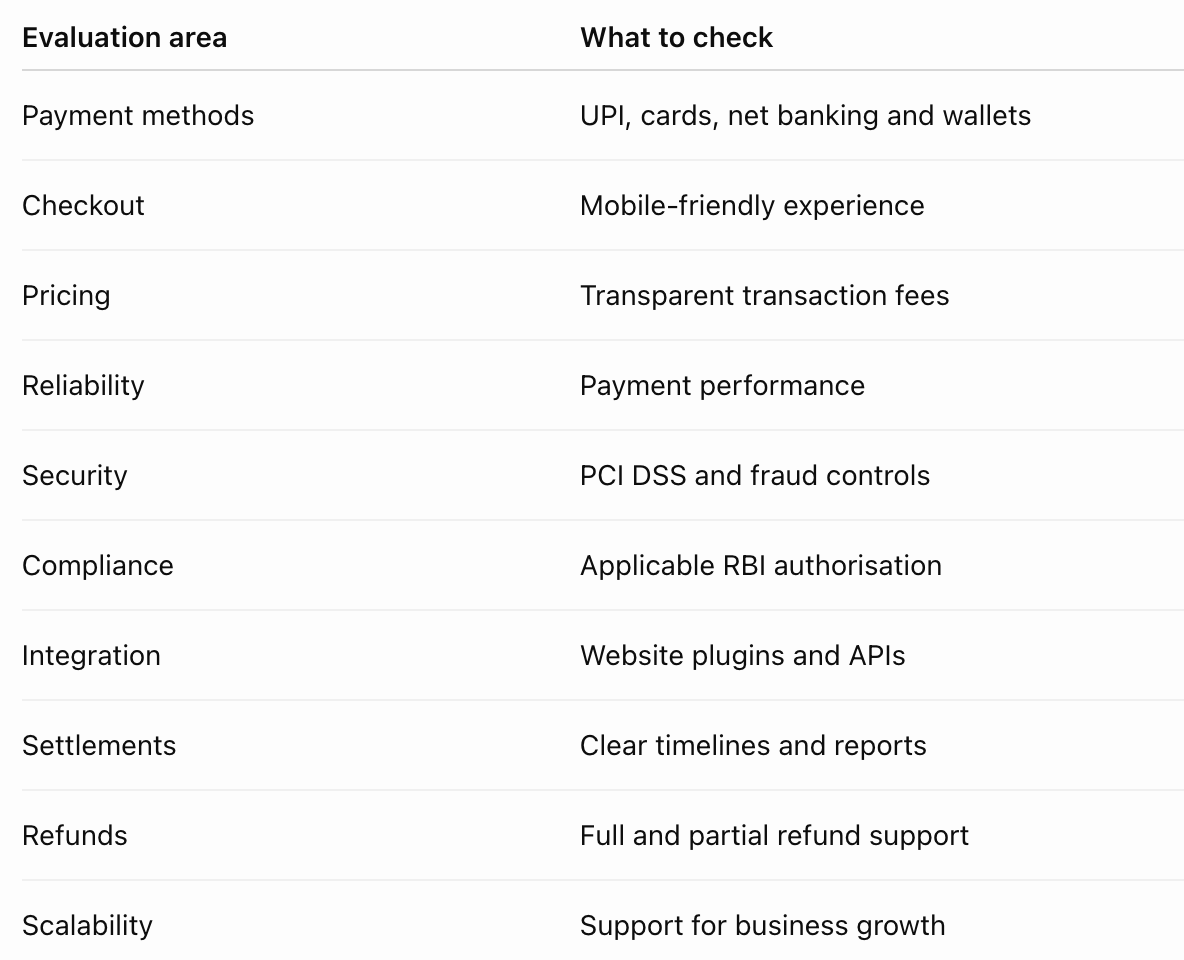
Payment Processor Selection Checklist
Before finalising your provider, compare your shortlisted options using this checklist.
Improve Your Online Payment Experience with Toucan Payments
Choosing a payment processor is an important decision for any e-commerce business. The right solution should help you accept payments conveniently, manage transactions, and support future growth.
Toucan Payments offers payment solutions for merchants, D2C brands, SMEs, and enterprises.
With AcquireFlow (Payment Gateway), businesses can explore online payment acceptance capabilities. SuperStream (Payment Orchestration) connects with 50+ payment processors, 200+ payment methods, and supports 100+ currencies, helping businesses manage diverse payment requirements through a unified orchestration layer.
Looking to improve your payment infrastructure? Connect with Toucan Payments to explore payment solutions for your e-commerce business.
Frequently Asked Questions
Q1. What should I look for in a payment processor in India?
A: Consider payment methods, transaction fees, security, checkout experience, payment reliability, settlement timelines, and website integration.
Q2. Which payment methods should an Indian online store accept?
A: UPI, credit and debit cards, and net banking are important options. Depending on your customers, you can also consider wallets and EMI.
Q3. How much does a payment processor charge in India?
A: Charges vary by provider, payment method, transaction volume, and merchant agreement. Always check the complete pricing structure.
Q4. Can an online store use multiple payment processors?
A: Yes. Businesses can integrate multiple payment providers depending on their technical setup. Payment orchestration can help manage multiple providers through a unified integration.
Q5. Why is payment settlement important for e-commerce businesses?
A: Timely and predictable settlements help businesses manage cash flow, supplier payments, refunds, and everyday operating expenses.