The Hidden Cash Flow Problem: Why Predictable Settlements Matter More Than Faster Payments
When businesses talk about improving payments, the conversation often revolves around speed. Everyone wants instant transactions, real-time payments, and faster customer checkouts.
But here’s a question that’s often overlooked:
How quickly can your business actually access the money after a customer pays?
For many businesses, that’s where the real challenge begins. A payment may be approved in seconds, but the funds might not reach your bank account until the next business day—or even several days later due to weekends, holidays, or settlement schedules.
This gap between payment acceptance and fund availability directly affects your cash flow. That’s why predictable settlements have become just as important as fast payments.
In this article, we’ll explain what predictable settlements really mean, why they matter for your business, and how they help create healthier cash flow.
What Is Payment Settlement?
Before discussing predictable settlements, it’s important to understand what a payment settlement actually is. A payment goes through multiple stages before the money reaches your business account.
The typical payment journey looks like this:

Many businesses assume the transaction is complete once the customer receives a payment confirmation. In reality, settlement is the final step where the payment processor transfers the collected funds to the merchant’s bank account.
Until settlement happens, the money isn’t available for payroll, supplier payments, inventory purchases, or business operations.
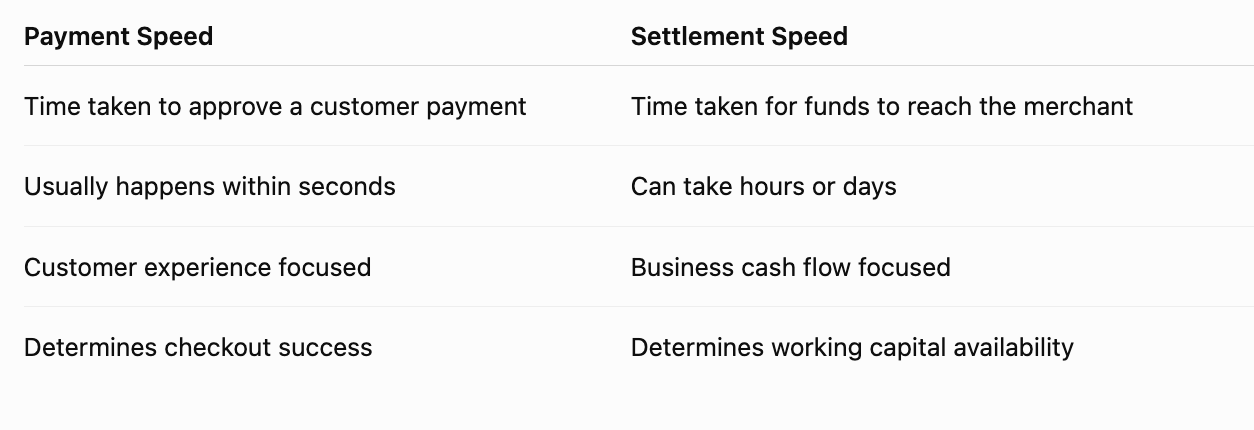
Payment Speed vs Settlement Speed
These two terms are often confused, but they represent different parts of the payment lifecycle.
Why Predictable Settlements Matter for Cash Flow
Cash flow isn’t just about how much money your business earns. It’s about when that money becomes available. Even profitable businesses can face cash flow challenges if settlements are delayed or inconsistent.
Let’s look at how predictable settlements make a difference.
1. Better Working Capital Management
Businesses constantly balance incoming revenue with outgoing expenses.
These include:
▹ Vendor payments
▹ Employee salaries
▹ Rent
▹ Taxes
▹ Marketing expenses
▹ Loan repayments
▹ Knowing exactly when settlement funds will arrive allows businesses to manage working capital more efficiently.
2. Smarter Inventory Planning
▹ Retailers and eCommerce businesses often need to replenish inventory quickly.
▹ Delayed settlements may postpone new inventory orders, leading to stock shortages and missed sales opportunities.
▹ Predictable settlements help businesses reorder inventory without relying on short-term borrowing.
3. Improved Vendor Relationships
Suppliers appreciate timely payments.
Late payments can result in:
▹ Lost discounts
▹ Penalties
▹ Damaged relationships
▹ Supply chain disruptions
▹ Reliable settlement schedules help businesses maintain consistent payment cycles.
4. Easier Payroll Management
▹ Employee salaries cannot wait because settlements are delayed.
▹ Businesses with predictable settlement cycles are better positioned to manage payroll without temporary funding gaps.
5. Better Financial Forecasting
▹ Finance teams rely on expected cash inflows to prepare forecasts and budgets.
▹ Unexpected settlement delays create inaccurate projections and make decision-making more difficult.
▹ Predictable settlements improve visibility into future cash positions.
How Unpredictable Settlements Hurt Businesses
Settlement delays can create a domino effect across the organization.
▸ Inventory Delays
Less available cash means delayed purchasing.
▸ Missed Supplier Discounts
Some suppliers offer early payment discounts.
Delayed settlements may prevent businesses from taking advantage of them.
▸ Increased Borrowing
Businesses may rely on overdrafts or short-term credit simply because revenue hasn’t settled yet.
▸ Poor Customer Experience
Businesses experiencing cash shortages may delay refunds or order fulfillment.
▸ Operational Stress
Finance teams spend more time tracking settlements instead of focusing on strategic work.
Industries That Benefit Most from Predictable Settlements
While every business benefits from reliable settlements, some industries depend on them even more.
1. E-commerce
High daily transaction volumes require continuous inventory replenishment.
Predictable settlements keep operations moving smoothly.
2. Food Delivery
Restaurants and delivery partners often operate on tight margins.
Daily settlements help maintain healthy cash flow.
3. Marketplaces
Marketplace operators need to settle funds with multiple sellers efficiently.
Consistent settlement schedules simplify payouts.
4. Subscription Businesses
SaaS companies rely on recurring payments.
Predictable settlements improve revenue forecasting and financial planning.
5. Healthcare
Hospitals and clinics manage ongoing operational costs.
Reliable settlements help ensure uninterrupted service delivery.
Predictable Settlement vs Instant Settlement
Instant settlements are useful in certain situations, but they aren’t always necessary. For many businesses, receiving funds at the same time every day is more valuable than occasional instant payouts.
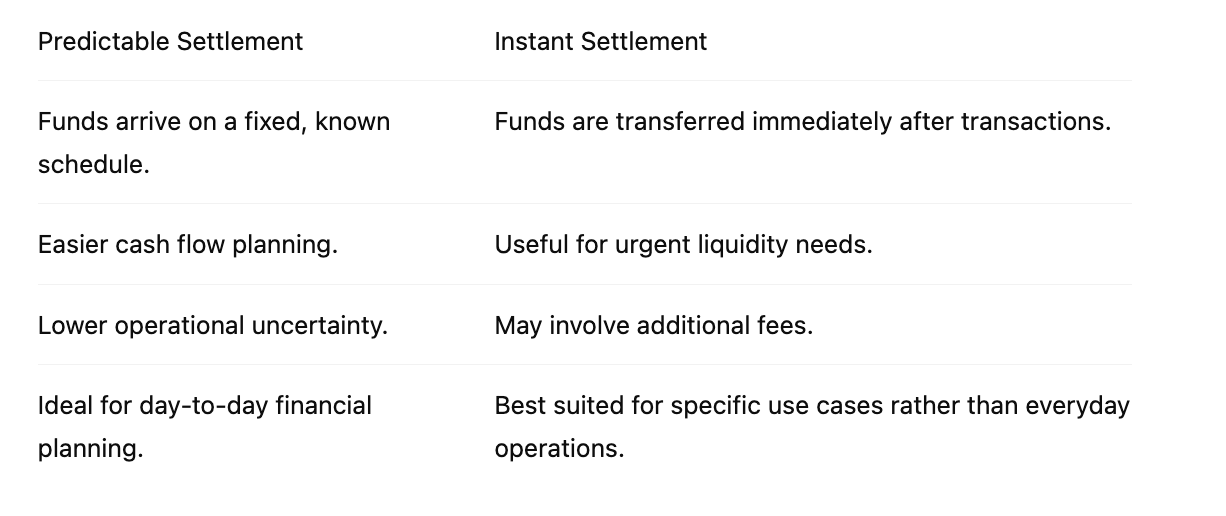
Ultimately, the right choice depends on your business model. For most organizations, consistency and visibility offer greater long-term value than speed alone.
Conclusion
Fast payments improve the customer experience—but predictable settlements improve the business experience.
When you know exactly when funds will reach your account, you can plan with confidence, manage working capital more effectively, pay suppliers on time, and keep operations running without unnecessary financial stress.
As digital payments continue to evolve, businesses should look beyond transaction speed and focus on settlement reliability. Consistent, transparent settlement cycles are not just a convenience—they’re a strategic advantage for healthier cash flow and sustainable growth.
Ready to Improve Your Settlement Experience?
At Toucan Payments, we help businesses streamline payment processing with modern infrastructure, transparent settlement workflows, and reconciliation capabilities designed to support healthier cash flow.
Talk to our payment experts to learn how smarter settlement management can support your business growth.
Frequently Asked Questions
Q1: What is a payment settlement?
A: Payment settlement is the process of transferring funds from the payment processor or acquiring bank to the merchant’s bank account after a customer completes a payment.
Q2: What is a predictable settlement?
A: A predictable settlement means businesses receive funds according to a consistent and known schedule, making cash flow planning easier.
Q3: Why is settlement timing important?
A: Settlement timing determines when businesses can actually access their revenue. Delays can affect payroll, supplier payments, inventory purchases, and overall cash flow.
Q4: Is instant settlement always better?
A: Not necessarily. While instant settlements are useful in certain situations, predictable settlement schedules often provide greater financial stability and easier cash flow planning.
Q5: How can businesses improve settlement efficiency?
A: Businesses can improve settlement efficiency by choosing payment platforms that offer transparent settlement schedules, automated reconciliation, real-time tracking, and flexible payout options.