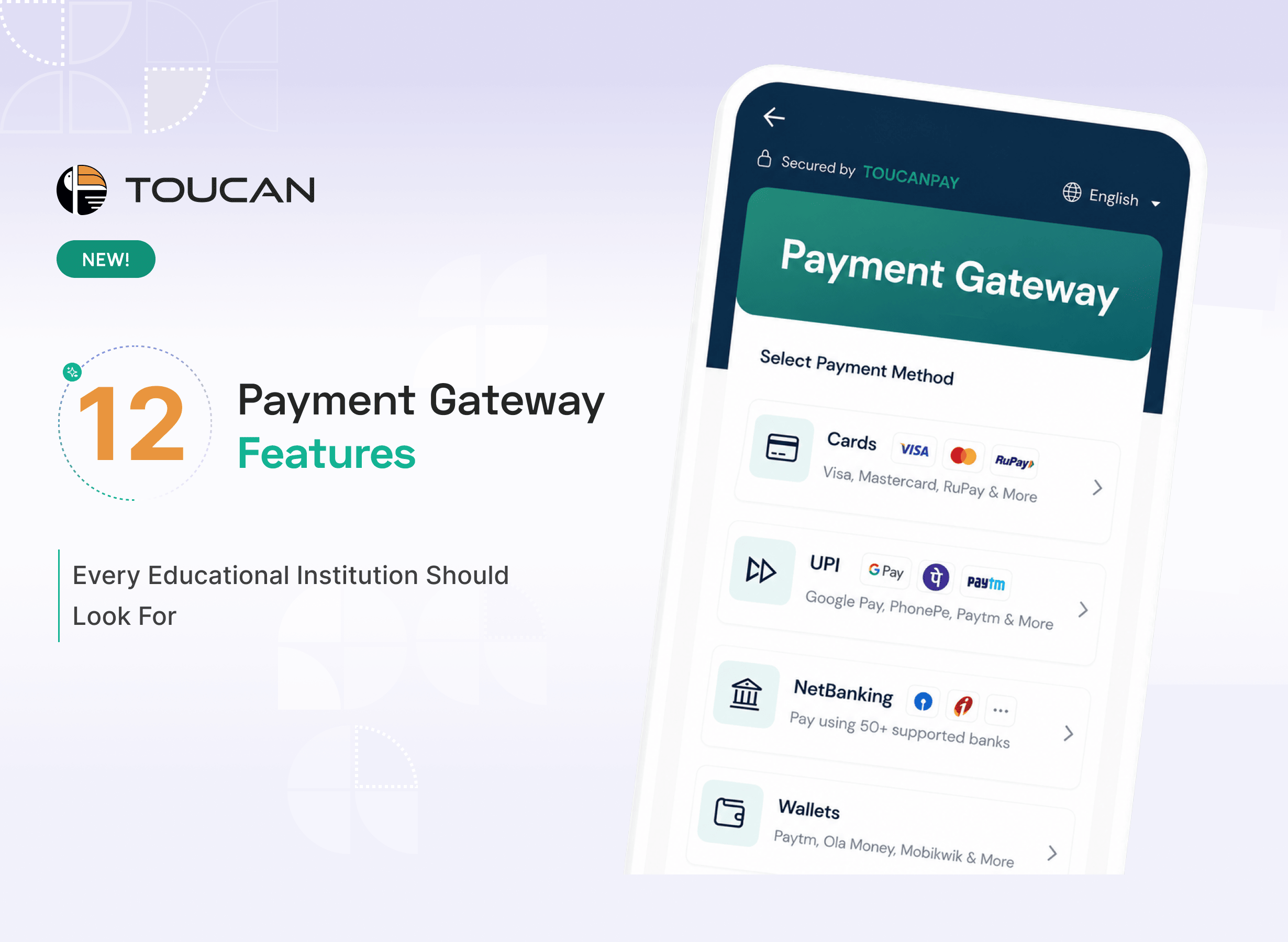
12 Payment Gateway Features Every Educational Institution Should Look For
Introduction
Collecting student fees involves much more than simply accepting online payments. Educational institutions manage recurring fee cycles, admission payments, hostel charges, examination fees, refunds, and thousands of transactions throughout the academic year.
Choosing a payment gateway with the right features can reduce administrative effort, improve payment success rates, and provide a better payment experience for parents and students.
This guide highlights the key payment gateway features every school, college, university, coaching institute, and EdTech platform should evaluate before making a decision.
1. Multiple Payment Methods
Parents and students expect the flexibility to pay using their preferred payment method. A payment gateway should support UPI, credit and debit cards, net banking, wallets, and other widely used digital payment options. Offering multiple payment methods helps reduce payment friction and improve successful transaction rates.
2. High Payment Success Rates
Failed transactions can delay fee collection and increase support requests. Look for a payment gateway that provides reliable processing, minimizes payment failures, and maintains consistent performance, especially during admission periods and monthly fee collection cycles.
3. Easy Integration with ERP, SIS & LMS
Educational institutions rely on systems such as ERP, Student Information Systems (SIS), and Learning Management Systems (LMS) to manage academic and financial operations. A payment gateway should integrate seamlessly with these platforms to automate payment updates and reduce manual work.
4. Automated Reconciliation
Reconciling hundreds or thousands of payments manually is both time-consuming and error-prone. Automated reconciliation helps finance teams match transactions with student records, generate reports, and simplify accounting processes.
5. Flexible Fee Collection
Every institution has different payment requirements. A payment gateway should support various fee types, including admission fees, tuition fees, hostel charges, transportation fees, examination fees, and other academic payments through a single platform.
6. Fast and Simple Refund Management
Refunds may be required due to admission cancellations, duplicate payments, or course withdrawals. A payment gateway should provide a streamlined refund process that reduces manual effort and improves the overall experience for parents and students.
7. Strong Security and Compliance
Educational institutions handle sensitive payment information. Choose a payment gateway that follows industry security standards, uses encryption, and complies with regulatory requirements to protect payment data and reduce fraud risks.
8. Real-Time Reporting and Insights
Finance teams should have access to payment reports, settlement summaries, and transaction insights through a centralized dashboard. Real-time visibility enables better financial planning and faster issue resolution.
9. Scalability
Payment volumes often increase significantly during admissions and semester fee collection periods. The payment gateway should be able to handle higher transaction volumes without affecting performance or the payment experience.
10. Easy Merchant Onboarding
Implementation should be simple and efficient. A payment provider with a structured onboarding process, clear documentation, and responsive support helps institutions go live faster and minimize operational disruptions.
11. Dedicated Customer Support
Payment-related issues often require immediate attention. Reliable technical and customer support ensures that payment disruptions are resolved quickly, reducing the impact on students, parents, and administrative teams.
12. Future-Ready Payment Infrastructure
As educational institutions continue to adopt digital technologies, payment requirements will evolve. Choosing a payment gateway with scalable infrastructure, regular product enhancements, and support for emerging payment methods helps future-proof your payment operations.
How Toucan Supports Educational Institutions
Toucan Payments is designed to help schools, colleges, universities, coaching institutes, and EdTech platforms simplify digital fee collection with a secure and scalable payment infrastructure.
Key capabilities include:
1. Support for multiple digital payment methods
2. Secure payment processing
3. ERP, SIS, and LMS integrations
4. Automated reconciliation and reporting
5. Reliable payment processing during peak collection periods
6. Dedicated onboarding and implementation support
Conclusion
Selecting a payment gateway isn’t just about accepting online payments—it’s about improving operational efficiency, reducing manual effort, and delivering a seamless payment experience for parents and students.
By evaluating providers against these 12 essential features, educational institutions can choose a payment solution that supports both their current requirements and future growth.
Ready to simplify fee collection? Explore ToucanPay’s Payment Gateway to discover a secure, scalable solution built for schools, colleges, universities, and EdTech platforms.
Related Article: Complete Guide to Choosing the Best Payment Gateway for Schools, Colleges & EdTech Platforms
Frequently Asked Questions
Q1: Which payment gateway features are most important for schools?
A: Schools should prioritize payment reliability, multiple payment methods, ERP integration, automated reconciliation, security, reporting, and customer support.
Q2: Why is ERP integration important for educational institutions?
A: ERP integration eliminates manual data entry, automates payment updates, and improves reconciliation, helping finance teams save time and reduce errors.
Q3: Can one payment gateway support different fee types?
A: Yes. Modern payment gateways can manage admission fees, tuition fees, hostel charges, transportation fees, examination fees, and other institutional payments through a single platform.
Q4: What should educational institutions look for beyond transaction charges?
A: Institutions should evaluate payment reliability, integration capabilities, security, reporting, scalability, customer support, and the overall ability to streamline fee collection processes.